What is DRIWEAR?
DRIWEAR™ is a fabric technology name used across performance T-shirts, singlets and polos in our range. It is not one universal fabric composition: the material, knit and care requirements depend on the style. Start with the product details for the garment you are considering.
Browse plain T-shirts and polo shirts to compare the actual garments, then use this guide to understand what to check.
What does DRIWEAR mean on a product listing?
Our DRIWEAR listings describe features such as moisture management, quick drying and different knit constructions. Some also list antibacterial treatments. Check the exact style description rather than assuming every garment has every feature.
Fabric weight, composition and construction are useful details for a shortlist. They do not, by themselves, guarantee how a garment will feel to every wearer or how it will perform in every activity.
Compare specific DRIWEAR styles
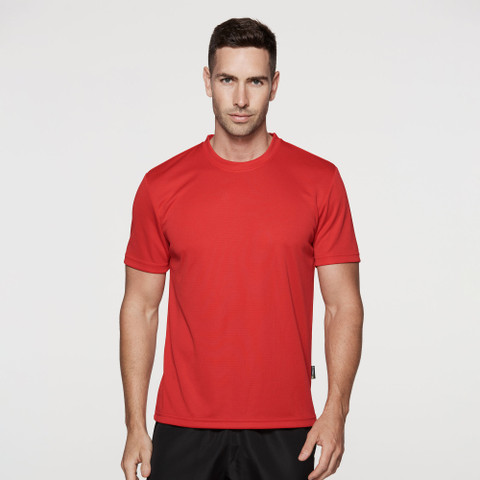
- BADGER men's DRIWEAR T-shirt: listed as 160gsm, 100% DRIWEAR polyester with a mini-waffle knit.
- FINERY men's DRIWEAR polo: listed as 155gsm, 100% DRIWEAR polyester with a birdseye knit.
These are examples from the current range, not a specification for every DRIWEAR garment. Open the individual product page for its colours, measurements and current details.
Choosing between a performance fabric and cotton
Begin with how you will use the garment: an active team, a customer-facing role or everyday casual wear. Compare the listed material, garment weight, fit and care instructions, then assess a sample if the feel of the fabric matters to your decision.
If you prefer a cotton pique option, compare the BAHAMA men's cotton polo alongside the performance styles. Neither a fabric name nor a photograph establishes the best choice for every workplace or wearer. Our office polo guide can help organise that comparison.
Care and odour-control claims
Follow the care label supplied with your garment. Washing temperature, drying and product instructions should come from that label, not a general rule for all performance fabrics.
An antibacterial or odour-control feature is not a promise that a garment never needs washing or will remain odour-free for its lifetime. Ask for the exact product specification if a performance claim is essential to your order.
Ordering blanks or arranging decoration
Blank-product purchases and custom decoration have different requirements. Our minimum for custom-decorated orders is 30 pieces, to keep the production run efficient. Smaller printers may accept lower quantities, but these runs generally cost more per piece.
Before arranging embroidery or printing, ask the decorator to assess the exact fabric, artwork and placement. Check the garment measurements using our Australian clothing size guide before committing to decoration.
Frequently asked questions
No. Composition varies by style. Our range includes polyester and poly-cotton DRIWEAR options, so check the material details on the exact product page.
No lifetime odour-free promise is made here. Any antibacterial or odour-control feature is specific to the garment; follow its care label and check the exact specification.
Our minimum for custom-decorated orders is 30 pieces for production-run efficiency. Smaller printers may accept lower quantities at a higher per-piece cost. This is separate from buying blank garments.
Explore Popular Articles
Custom Trucker Hats Australia: Embroidery, Print and Blanks
Trucker hats are having a moment again. Not just with farmers and tradies: small businesses, sports...
EOFY Workwear Buying Guide: Tax-Deductible Uniforms for Australian Businesses
Workwear and uniforms for Australian businesses - ATO uniform categories explained, the right garme...
The Australian Clothing Size Guide: How to Find Your Size in Any Garment
Looking for a clothing size conversion? Use the AU, US, UK and EU reference tables below as a starti...
2026 Wardrobe Reset: 7 Essential Basics You Actually Need
Quick Summary A strong basics wardrobe is built on fit, fabric, and repeat wear. Start with tees, p...